Sorry, your browser is out of date. The content on this site will not work properly as a result.
Upgrade your browser for a faster, better, and safer web experience.

Author Archive

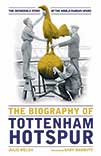
The Biography Of Tottenham Hotspur

314 Spursby Julie Welch
Vision Sports, £20
Reviewed by Alan Fisher
From WSC 314 April 2013

Buy this book


The Twitter hashtag #againstmodernfootball is hardly a scientific dissection of the faults of the modern game but it has become an outpouring of genuine frustration and growing disenchantment: exorbitant ticket prices, alienated and marginalised fans, an obsession with the here and now and instant success. Julie Welch’s Biography Of Tottenham Hotspur is not only a revealing insight into the club, it could well restore your faith in football.

Welch traces the development of the club’s character and personality, showing there is more to a football club’s history than a list of players, matches and trophies. Her beloved Danny Blanchflower’s statement that it’s not just about winning, it’s about glory and doing things in style, articulates a culture and identity that dates back to the club’s formation in the 1880s, when three schoolboys met under a lamp-post 100 yards from the current ground.

Harry Redknapp and André Villas-Boas come from different schools of management but both talked of the need to play good football the Spurs way. Arthur Rowe’s pioneering “push and run” won a League title in 1951. He was influenced by another innovator, Peter McWilliam, Spurs boss in the 1920s, and in turn inspired the incomparable Bill Nicholson to bring unparalleled success in the 1960s and early 1970s. The familiar mixture of flamboyance and exasperation, the sublime and erratic, would be instantly recognisable to successive generations of Spurs fans.

We deny history at our peril. Alan Sugar saved the club but he understood the balance sheet better than his heritage, hence the crushing mediocrity of the 1990s with Christian Gross, Gerry Francis and George Graham. Then again, there’s nothing new under the sun. Financial crises, businessmen wanting to profit by moving the ground, an ability to snatch defeat from the jaws of victory: any decade at Spurs, not just 
the last one.

Welch is an author and screenwriter, the first woman football reporter in Fleet Street to have her own byline. She is a beguiling storyteller who tells the tale with a curiosity and style that sweeps the reader along. The air of artistry and magic seduced her as a schoolgirl but it’s not quite right to suggest they entice fans these days. Peer pressure, family ties or blind accident are more common factors. However once committed it keeps us there, becoming part of who we are.

The nature of Spurs’ identity as a Jewish club is the only omission, perhaps because although it’s an independent publication, unusually the club have co-operated and are shy of potential controversy. The absence of statistics and tables may dismay lovers of detail, who will point to several 
proof-reading errors.

It’s a beautiful book, wonderfully written, that is essential for Spurs fans and deserves to be widely read because it is about perspective, culture and identity, precious to fans everywhere yet under attack. Read it and I defy you to tell me that finishing fourth in the Premier League is what truly matters.
Buy this book

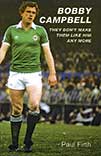
Bobby Campbell

314 BobbyCampbellThey don’t make them like him any more
by Paul Firth
Bantamspast, £12
Reviewed by Jason McKeown
From WSC 314 April 2013

Buy this book


It’s long been a mystery to me how people of a certain age will lament the behaviour of modern day footballers and then, within the same breath, romanticise the bad lads of decades earlier. The story of Bobby Campbell, Bradford City’s all-time leading scorer in two spells between 1979 and 1986, features tales of drinking sessions, fighting and police run-ins that would prompt moralistic howls of derision were he playing today. Yet the book’s tagline – “They don’t make them like him any more” – invites us to consider that football is worse off today for the absence of someone whose off-field antics have become as much a part of Valley Parade folklore as his 131 Bantams goals.

Still there is an almost apologetic tone to some of the stories of punch-ups with bouncers and drinking in the dressing room before matches, with biographer Paul Firth focusing more on Campbell’s many admirable qualities. Any footballer who recovers from a broken leg at 19, plays for nine different clubs across three continents and makes the Northern Ireland 1982 World Cup squad after a season in Division Four has quite a story to tell.

The book is a combination of Firth’s narration and the views of Campbell himself, which are interwoven throughout. At times the switching back and forth into the subject’s direct quotes feels awkward but the striker’s blunt statements add a valuable layer of understanding into how his career unfolded. Campbell is brutally honest about the sectarian troubles he experienced growing up in Belfast (“I had a few friends who were assassinated, one just for courting a Catholic girl”) and why his career, which started promisingly at Aston Villa, at one stage drifted into the relative obscurity of playing part-time in Australia.

Campbell’s two spells at Bradford City, his heyday, take in two promotions, the club almost going bankrupt (he had to be sold to Derby to raise money) and the tragic Valley Parade fire of 1985. You get a sense that, although Campbell had something of a hardman reputation, he deeply cared about team-mates, supporters and the club. The book’s most memorable moments are provided by interviewees who played alongside Campbell. They praise both his playing ability and caring nature, such as when he raced off a team bus that had crashed into a car to try to save the lives of two children: “It’s typical of the person, going in and not being afraid of anything,” former team-mate Stuart McCall says.

Following the Bradford fire, a City supporter tells of Campbell’s regular hospital visits to various supporters’ bedsides, as he and many others recovered. Despite a decent final spell at Wigan, Campbell was apparently fed up with football when he retired at the age of 32. Nonetheless, his biographer does an excellent job conveying the lasting legacy of this unlikely hero.

Buy this book

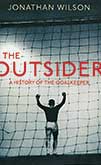
The Outsider

314 OutsiderA History of the Goalkeeper
by Jonathan Wilson
Orion Books, £20
Reviewed by Jonathan O’Brien
From WSC 314 April 2013

Buy this book


Of all the “name” football writers on the merry-go-round today, Jonathan Wilson is arguably the best value, even if a few of his many theories and pet obsessions tend towards the overly self-indulgent. He’s a busy man, too – running the quarterly Blizzard while producing columns for the Guardian and Sports Illustrated and roughly one book per year. The Outsider is his sixth tome since 2006, the kind of workrate that sees a lot of writers spread themselves too thinly. But Wilson’s prodigious energy doesn’t seem to dilute the quality of what he comes up with and this meticulous study of the goalkeeping art is characterised by the attention to detail that he brings to everything he writes.

Starting with a study of football in the 1800s, he demonstrates how the mere fact of being a goalkeeper has always carried with it the smell of the scapegoat. In Victorian times the position was occupied by small boys, “duffers” and “funk-sticks” (milksops who had failed to perform elsewhere on the pitch). As the years went on and the sport evolved at snail’s pace, deaths were commonplace for keepers – Celtic’s John Thomson, accidentally kicked in the head during a match in 1931, being an infamous example.

Wilson has put in plenty of air miles, heading for locales as far-flung as Brazil and Russia. The latter country, which once produced great keepers by the lorryload, has nursed a special obsession with the position since before the 1917 revolution (an assertion backed up with quotes from none other than novelist Vladimir Nabokov). Brazil, contrariwise, has had mostly white keepers due to some strange socio-racial issues – the odd exception such as Dida not withstanding. Although, as Wilson shows, English football has nurtured a similar instinctive distrust of black keepers.

African keepers, specifically, sit even lower down the food chain of perception. Two of the best, Cameroon’s Thomas N’Kono and Joseph-Antoine Bell, enjoyed a (mostly) friendly 20-year rivalry after learning from Yugoslavian legend Vladimir Beara. N’Kono was the natural, Bell the hard worker. N’Kono shone at the 1982 World Cup, got a move to Spain out of it and became an Espanyol hero. Bell had to wait until the disastrous USA 94 campaign to play in the finals, by which time he was 39 and too far over the hill to do himself justice.

Wilson’s fondness for idiosyncratic structuring sometimes weakens the book’s sense of direction. The Brazilian chapter abruptly veers into Scotland for several pages, then heads back to Brazil. Not that the material therein isn’t interesting or informative – the passages concerning the appalling bad luck that plagued Jim Leighton’s long career are particularly vivid – but layering the material in such an odd way seems unnecessarily perverse.

In the main The Outsider is a terrific history of its subject. It wears its knowledgeable perspective lightly and deftly works its vast research into the text without battering you over the head with it. Wilson can always be relied upon to come up with something a little bit different and a little bit special, and this has plenty of both.

Buy this book

Surplus stock

wsc305Manchester City are the new champions but, as Tony Curran explains, their unethical hoarding of players has tarnished their Premier League victory

Harry Dowd was a goalkeeper who played for Manchester City during their glory years of the late 1960s and early 1970s.  He was a reasonable keeper but apparently an excellent plumber. Legend has it that he used to negotiate job offers with crowd members behind his goal, offering competitive rates for bathroom re-fits when play was at the other end.

Read more…

Eye witness

wsc309 From the other end of the ground Nottingham Forest fans looked on as the disaster unfolded in front of them, recalls Ian Preece

Pretty much every account of Hillsborough seems to mention the weather. The truth is it was an incredibly beautiful morning: blue skies, fluffy white clouds, just a bit chilly in the shade – but the forecast was great. Winter was over and if there was a morning to put the proverbial spring in your stride, this was it.

Read more…

Copyright © 1986 - 2025 When Saturday Comes LTD All Rights Reserved Website Design and Build C2