Sorry, your browser is out of date. The content on this site will not work properly as a result.
Upgrade your browser for a faster, better, and safer web experience.

The Archive

Articles from When Saturday Comes. All 27 years of WSC are in the process of being added. This may take a while.


Booming business

Looking at football in print, Harry Pearson discusses how the game has become more important to the broadsheet press

In the late-1980s I decided to investigate an incident that had occurred at Ayresome Park just after the Second World War. Within my family the incident was infamous, or celebrated, it was hard to tell which, because it involved my grandad’s cousin, Davey. Middlesbrough were playing Arsenal and, after a mêlée in the goalmouth, Boro’s goalkeeper Dave Cumming had walked up to the Arsenal centre-half Leslie Compton, decked him with a right hook and then marched off the field. As Compton rose groggily to his feet a group of fans had run on the pitch and one of them – possibly Davey – had felled Compton again.

Read more…

War of the words

David Stubbs looks at the tabloids’ unique style of football reporting

In Chris Horrie and Peter Chippindale’s Stick It Up Your Punter!, their study of the Sun during the 1980s editorship of Kelvin MacKenzie, the authors recount a journalists’ strike during which sub-editors had to write up the football match reports. Wizened old cynics that they were, they decided to turn the task into an exercise of which of them could come up with the most meaningless cliche with which to pad out their copy. The winner was “kick and rush glory boys”.

As with tabloid coverage across the board, their headlines, straplines and copy have, over the past quarter of a century, generated a tag cloud of grab-bag buzz-words – “blast”, “probe”, “lions”, “tragedy”, “flops”, “fury”, “blast”, “swoop”, “sensational”, “glory”, “shame”, “thugs”, “heroes”, and so forth. Not a great deal has changed in 
this respect.
Some have fallen by the way with time. Gary Lineker was habitually described as “hot-shot” back in his mid-1980s pomp, a mode of description which eventually died of hackneyed shame. Even “skipper” seems in danger of extinction.

All of these words have one thing in common. Like the word “pesky”, which was only ever uttered by the likes of Little Plum in the Beano, they are at once deadeningly familiar and yet unspoken by actual people in real life, least of all tabloid readers. A particular example of this is “shaker”, used not to allude to a member of The United Society of Believers in Christ’s Second Appearing, but to convey in six letters an injury scare.

These devices also function to contrast with the inconsequential reality of the football world on a day-to-day basis, as well as the warily, dully discreet equivocations favoured by players and managers when talking to journalists. Much as on Football Focus they’re forced to jazz up a teeth-grindingly tedious interview with a Scott Parker by switching in and out of grainy black and white or zooming in on his hands, so these words add a falsely incendiary gloss.

So, in October 1986, we read in the Daily Mirror that Tony Adams was Gunning For Kerry Dixon on the eve of an Arsenal v Chelsea fixture. Here are the fighting words from Adams whose psychologically warfaring mood that headline captures: “All First Division strikers need careful watching and facing Kerry will be another good test for me.”

Look for sensationalist cliche and you would assume the first port of call to be the Sun. It’s certainly had its moments of crass extremism, such as Argies Get Their Revenge, following England’s World Cup exit to the Hand of God goal in 1986, or the pillorying of Messrs Robson and Taylor. However, it’s almost disappointing to find, on closer inspection, that their coverage throughout the 1980s and 90s was restrained by the standards of the rest of the paper.

So, when flicking through its 1980s pages, with those abysmal Franklin cartoons, red-baiting and headlines like Rape: Why Men Are Hidden Victims, there is also relatively considered prose from the likes of Martin Samuel. Nothing masterly, mind, still tabloidese, with every paragraph beginning with the words “And” or “But”. Yet by no means as addled or moronic as you might fear. Even in 1996, though the coverage of England’s semi-final against Germany is depressingly festooned in flags of St George, there is virtually no “Kraut” bashing.

That, infamously, could not be said for the Mirror under Piers Morgan’s editorship. It was prior to England v Germany that he produced the mock-up cover of Stuart Pearce and Gazza in tin helmets and the Achtung! Surrender headline, a stunt which he recently described as prompting a “massive sense of humour failure” on the part of his detractors. It turns out he unapologetically regards the cover as a sense of humour 
success.

This wasn’t a one-off. From the mid-1980s onwards, the Mirror was more startlingly prone to martial imagery than its Wapping counterpart, real Orwellian “war minus the shooting” stuff, tastelessly so a time when hooligan firms were squaring up to each other for real – indeed, you could read all about these “thugs” and their “nights of shame” on the aghast Mirror back pages.

The word “killer” is deployed frequently and airily on its back pages, Leeds manager Billy Bremner is “blitz Billy”, Paul and Clive Allen, up against each other for QPR and Spurs, are a “family at war”. Man Utd are “shell-shocked” to be beaten 1-0 at Wimbledon, while a 15,000-strong fans’ petition to regain the their ground and presence at a club meeting goes under the headline 
VALLEY WAR. The gruesome, bloody details follow – police were called as directors Derek Ufton and Michael Norris “reeled under a barrage of questions”.

Then, of course, there are those trenches, from which the likes of Crystal Palace are forever charging “with bayonets fixed”, in which burly, yeomen English defenders line up side by side, in which the real nitty-gritty business of football is conducted, and to which the foreign influx would probably be averse. In the Daily Express, in 1992, James Lawton worried about how “battle hardened” Eric Cantona, then of Leeds, would prove in the impending Premier League season, in a piece titled Dainty Eric Must Face Up To Trench Warfare.

If foreigners weren’t conspicuous in tabloid-land decades ago, black footballers certainly were. If you hadn’t noticed in the 1980s that John Barnes, for instance, was black, then the tabloids were on hand with constant reminders. He was, in 1988, our “brightest black pearl”, or, according to Emlyn Hughes, the “best black player ever produced in this country”, an important distinction. In 1986, Steve Curry in the Express felt obliged to describe the “happy Calypso manner” in which Barnes told him he would be prepared to play anywhere for England.

However, when Barnes, Ricky Hill and Brian Stein flew unannounced to Jamaica to take part in a fundraising match there was Fury At Missing Black Aces in the Mirror. Much has remained constant in tabloid coverage. Though Wayne Rooney’s rise has prompted a depressing increase in the penchant for dreadful name-based puns, the England team still vacillate between “lionhearts” and “flops”, as opposed to the routinely, chronically middling 
mediocrities that they are. But some things at least have changed for the better.

From WSC 295 September 2011

Facing the property ladder

There are problems with the Brandywell but, as Aidan Bonner explains, Derry City’s frustrating search for a new stadium continues

Derry City are a club that is neither here nor there. Located in Northern Ireland but competing in the Republic, they have often found themselves caught between two worlds. Based in the Irish FA’s jurisdiction, the club were forced to leave the Irish League as the political situation and sectarian tensions worsened around them. After kicking around junior leagues for 13 years, Derry eventually re-emerged in the Republic of Ireland’s national league in 1985. This bout of border-hopping can still cause the club problems from time to time.

Drowned by a saga of double contracts and financial mismanagement in 2009, Derry City returned as a new, debt-free entity last season. Although the new DCFC were initially left to explore the delights of the lower of Ireland’s two senior leagues (dubbed the “Discover Ireland” division by fans) their budget still outstripped many of their rivals and they were promoted at the first time of asking. Back in the Premier Division, things are going swimmingly. But many fans have long viewed the club’s Brandywell home as being in a location that discourages potential new supporters.

Situated in the heart of what was once the predominantly nationalist “Free Derry” district – a no-go area for the RUC at the time – the ground remains unpoliced, with the club relying on the services of a dedicated band of stewards. This arrangement has been largely successful but can still prove problematic on occasion, as potential flash-point fixtures with the big Dublin clubs have recently shown.

Health and Safety officials reduced the Brandywell’s capacity by 700 this year. With the ground’s slightly dilapidated state, the promise of one new 2,500-seat stand does little to satisfy supporters, many of whom would prefer a more permanent move to either the vacant Templemore or Fort George sites in the city. The Fort George site is in the hands of Ilex, the company set up to take charge of the regeneration of the city, who have yet to engage DCFC.

Proposals and projects are nothing new to City supporters. In mid-2006, the club unveiled plans for a new £15 million complex to be built on the site at the Brandywell, complete with 6,000-seat ground, synthetic 3G pitches and retail development. This bid fell apart and the eventual demise and rebirth of Derry City brought them back to square one – a “new” club with an old ground, hoping to be gifted what they cannot afford to build.

But who is going to hand them anything? The Maze Stadium project was an ambitious plan to build an all-encompassing home for Northern Irish sport which collapsed. Instead, the money set aside for this plan has been dispersed to football, rugby and GAA clubs around the country. The cost for the proposed new stand at Derry is to be drawn from this funding, but that alone would be a poor return.
Derry City officials have watched as new stadium projects for clubs such as Crusaders began at great pace. In fact, across the town work is nearing completion on major improvements to the home ground of Institute, Derry’s Drumahoe-based Irish League neighbours. Meanwhile, just over the border in Donegal, a new 6,800-seat home for Finn Harps has been given the green light. For Derry supporters, seeing the door to 21st century facilities opened to a host of “smaller” clubs has raised serious questions.

The belief that Derry City playing across the border could harm their chances of receiving funding from the Northern Irish executive grew to the extent that in 2008 local MLA Raymond McCartney challenged Gregory Campbell, the minister for culture, arts and leisure, to acknowledge publicly that the club’s cross-border status would not be an issue. Recently, however, the lack of progress has mostly been blamed on the apathy of local politicians and the failure of club officials to apply any pressure.

For the time being, as the city council, rather than the club, own the ground, they must apply for funding and also have the final say on any proposed improvements. The suggested changes are unlikely to attract new supporters or to appease those already there. On the positive side, all signs indicate that money may be available for the right project, with the right pitch. The drawback is that this may be a brief opportunity for clubs seeking funding, and that local officials seem content to sit on their hands and let it drift by.

From WSC 294 August 2011
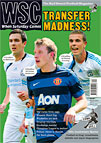
Continental drift

The Europa League has had a bad press recently. Georgina Turner sets out to defend the tournament and dispel some myths

It’s May 9, 2012. About 10.30pm local time in Bucharest. Tottenham captain Ledley King looks embarrassed as he turns away from UEFA president Michel Platini, raises the Europa League trophy not much above chin height and quickly hands it down the line. Around him the Stadionul National is silent except for the noise of television crews packing up, litter being picked and the runners-up heading back down the tunnel – their supporters have already filed out of the ground and Tottenham’s were never here. Some of them have seen the result on the news and some received texts from friends. But who cares?

Read more…

Reading 2 Swansea City 4

A dramatic season finale lives up to the pre-match hype. Swansea wobble but survive Reading’s comeback as the Welsh fans look forward to top division games and being patronised by Gary Lineker. Huw Richards recalls the events at Wembley

The essential character of this Championship play-off final was determined 13 days earlier when Reading won the second semi-final. With Cardiff’s elimination it became, as a Swans-supporting friend texted, “a football match, not a civil war”.

Read more…

Copyright © 1986 - 2026 When Saturday Comes LTD All Rights Reserved Website Design and Build C2