Sorry, your browser is out of date. The content on this site will not work properly as a result.
Upgrade your browser for a faster, better, and safer web experience.

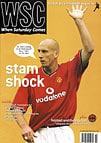
Jason Dozzell

Gavin Barber attempts to explain how a loping Ipswich youngster became a cult hero at his hometown club but a figure of fun almost everywhere else

F­ootball is littered with underachievers, players who are shoved into the spotlight at an early age like American prom queens with dreams of Hollywood, and end up on the sport’s equivalent of the shopping mall circuit. Anyone could instantly reel off a list of their club’s past players who fit this description (unless you support Manchester City, in which case it might be quicker to list the ones who don’t). But the Jason Dozzell story is somehow more odd than simply to merit some weary epithet about “not living up to his potential”. Many of those who observed his career at close quarters from an early stage found him an utterly compelling footballer to watch; the rest of the world will probably never understand why.

Read more…

Braodband of gold

Where does the future of football on the internet lie? Bob Roberts believes big clubs hold the whip hand, while general, free-access sites are in trouble

On Tuesday May 14, 2001, Celtic made internet foot­ball history by transmitting Tommy Boyd’s testimonial game against Manchester United as the first ever live broadband broadcast. The broadcast on their official website was the first “free-to-air” football match available on the internet, with pic­ture quality allegedly comparable to television.

Read more…

Dukla 0 Slavia 1

Sam Beckwith remembers the 1997 Czech cup final between Dukla Prague and Slavia Prague which started Dukla's fall from grace

There’s a growing trend to sentimentalise the years of communist rule in the Czech Republic, with pro­paganda-bedecked cafes popping up on Prague streets and old newsreels running on TV. So far, however, Dukla Prague have escaped the trend. One of Czech football’s most famous names disappeared in 1997 with more of a whimper than a bang, and there are few signs that it’s about to be rehabilitated.

Read more…

Aggro phobia

John Williams argues that the efforts of the police to keep hooliganism in the spotlight are masking the real progress that has been made combating violence

Notice the signs, recently, of a new football season approaching? Press stories complaining of too much TV football coverage; fierce debates on player wage hikes; Deloitte and Touche’s annual lecture on the booming financial power of the Premier League and how the market is good for football – but watch out for that nasty club overspend; and now, slotted nicely into the week leading up to the big kick-off, the Nat­ional Criminal Intelligence Service report on the arrest figures related to football. This, too, has become some­thing of an annual media event.

Read more…

More is less

Roger Titford leafs through responses to our survey on TV football and concludes that viewers are overwhelmed and irritated by the sheer volume on offer

Even before the first remote control of the new sea­son had been punched in anger, the backlash ag­ainst the “surfeit” of TV football had begun, with two muted BBC voices, John Motson and Kenneth Wol­stenholme, to the fore. Our survey (WSC 174) looked back to our readers’ ex­periences of the past season’s TV football. Our read­ership, of course, is not representative of all viewers, but the 700-strong sample is bound to include a higher proportion of dedicated, active and informed fans than your average sofa-full.

Read more…

Copyright © 1986 - 2026 When Saturday Comes LTD All Rights Reserved Website Design and Build C2